
History & Origin
The Story of Larimar: Dominican Origins, Its Name and the Stone Today
Meet the blue pectolite associated with Barahona, learn how Larimar got its name and discover what its history means when choosing a loose stone.
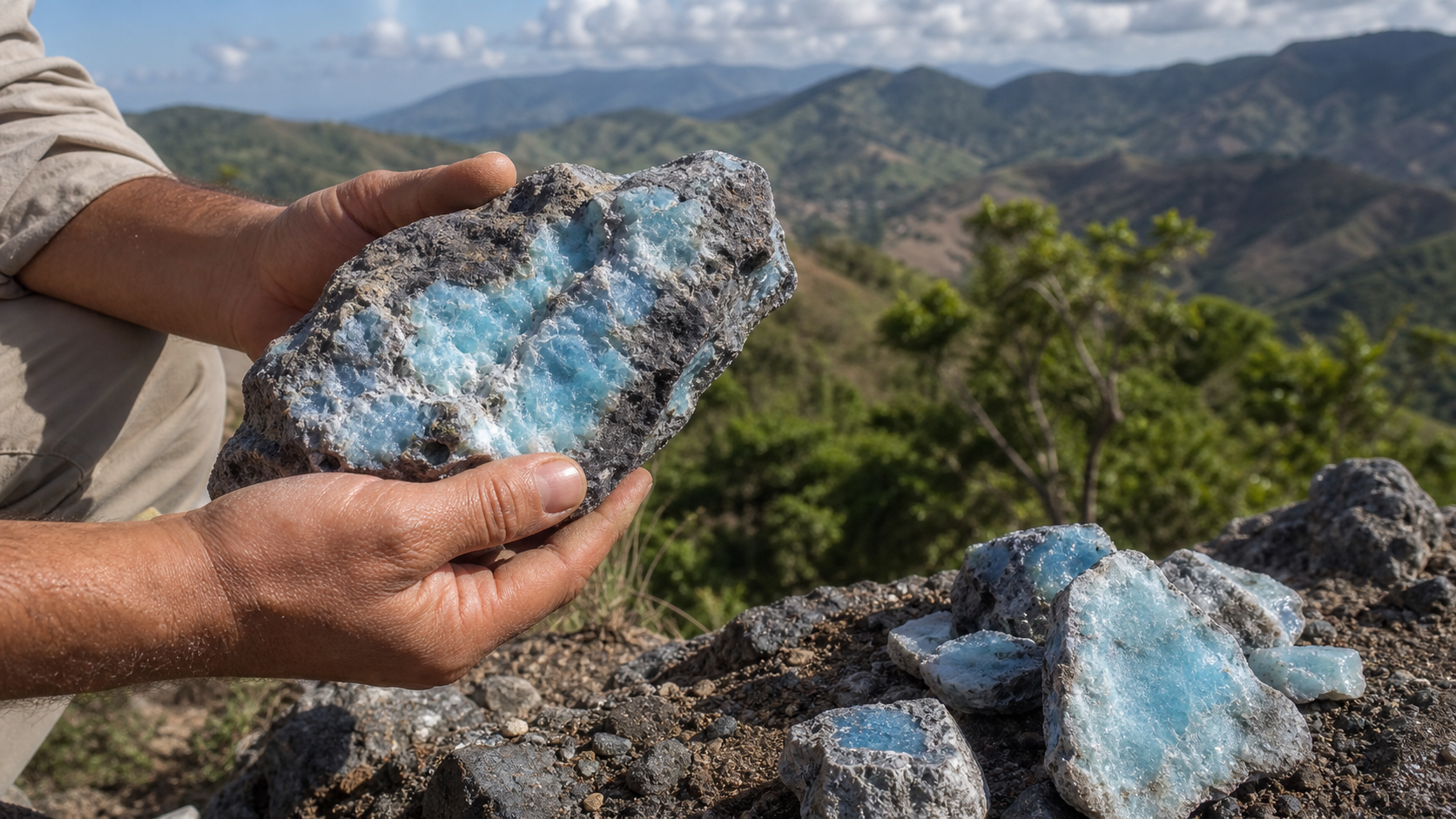
Original editorial illustration created for this guide. It is not a laboratory specimen, archaeological photograph or reconstruction.
A rare blue pectolite
Larimar is the trade name for blue pectolite from the Dominican Republic. Pectolite occurs elsewhere, but the attractive blue material associated with Larimar is linked to volcanic rocks in the country’s southwest, particularly the Barahona region.
From local material to a named gemstone
Gemological research records that blue pectolite specimens were appearing in Santo Domingo jewelry shops by 1975. Miguel Méndez became an early supplier to the domestic trade. The name “Larimar” combines his daughter’s nickname, Lari, with mar, the Spanish word for sea. Earlier venture documents used “Travelina,” but Larimar became the lasting trade name.
Mining and the Bahoruco area
The deposit is worked through concessions under Dominican mineral law. Mining developed through small workings and cooperative organization near Bahoruco. Material is recovered from volcanic host rock and associated deposits, then sorted, cut and polished according to color, pattern, stability and intended use.
Why the story matters
Larimar is more than a color name. Its identity is tied to Dominican geology, miners, lapidary work and jewelry production. Responsible sellers should identify it by material and origin, show the exact item and avoid implying that every pale-blue pectolite is Dominican Larimar.
Color, pattern and care
Buyers usually value strong blue color, attractive white patterning and a good polish. Larimar is suitable for jewelry but should be protected from hard knocks, prolonged strong heat, harsh chemicals and unnecessary intense sunlight.
From the origin story to your collection
A gemstone’s history gives context, while an individual listing tells you what you are buying. Compare a rough piece’s exposed blue areas and matrix with the shape, pattern and surface of a finished cabochon. Check dimensions rather than judging scale from a photograph. Dominican origin describes the material’s source; Caribbean Gemstones orders are dispatched from Florida, USA.
Sources and further reading
Explore exact-item pieces
Every available piece is individually photographed, so the item shown is the item you receive.
Shop related piecesMore journal articles