
Maritime History
The Atocha Shipwreck: The 1622 Disaster and Why Provenance Matters
Explore the Atocha’s loss in the Florida Keys, its place in maritime history and the evidence that distinguishes recovered artifacts from inspired designs.
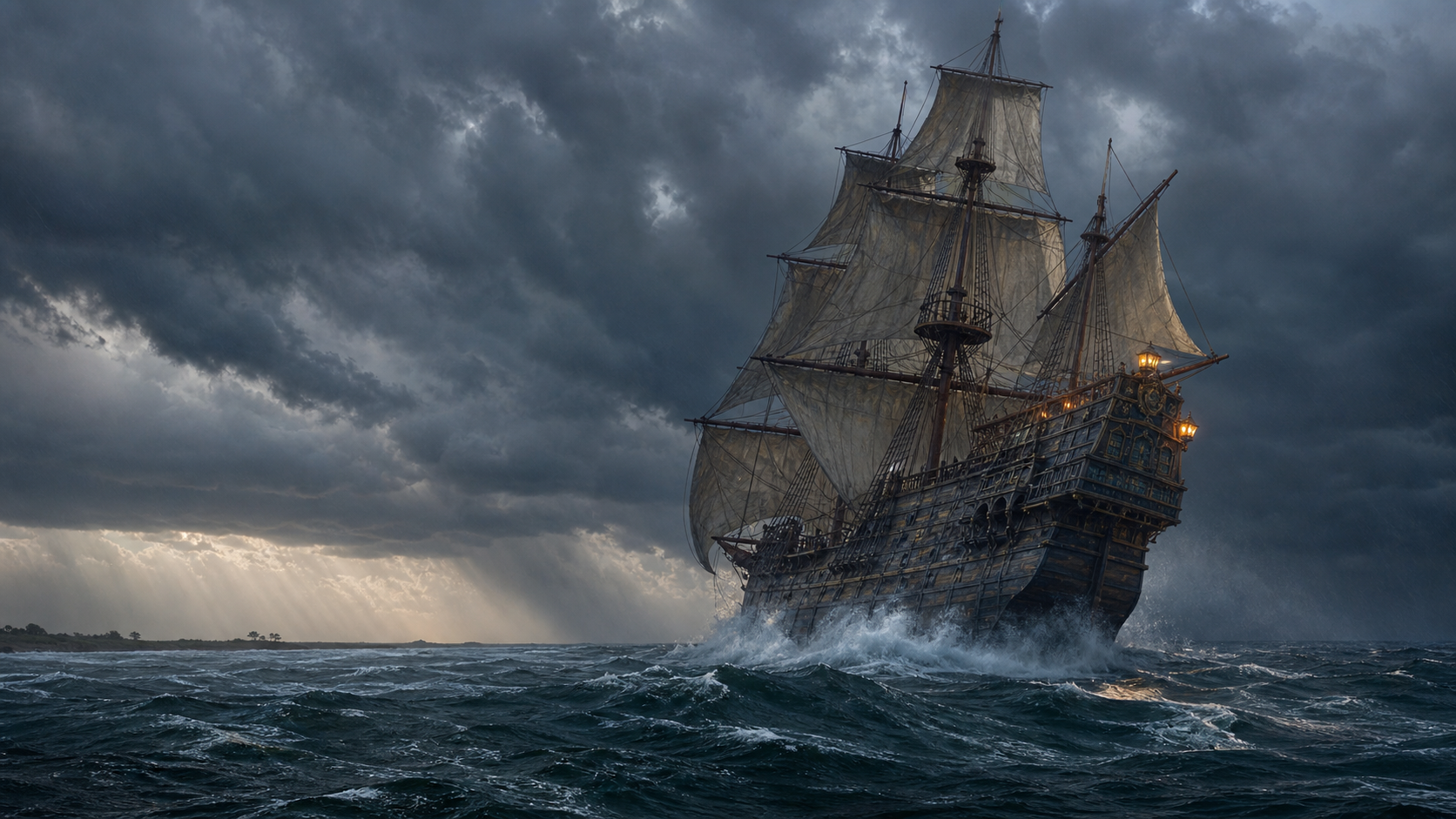
Origenal editorial illustration created for this guide. It is not a laboratory specimen, archaeological photograph or reconstruction.
The Tierra Firme fleet
Nuestra Señora de Atocha sailed as part of Spain’s Tierra Firme fleet, which carried people, official cargo and private goods between the Americas and Spain. In 1622 the Atocha and Santa Margarita were among vessels in a 27-ship convoy departing Havana.
The hurricane and wreck
A violent hurricane struck the fleet in the Florida Keys. The Florida Museum reports that the Atocha and Santa Margarita were lost with appróximately 380 people, while further losses occurred among ships wrecked toward the Dry Tortugas. The disaster was human before it became a treasure story.
Cargo and historical evidence
The ships carried silver, gold, copper, coins, trade goods and personal possessions. Archaeologists value wreck sites because objects, ship construction and cargo records reveal colonial trade, labor, warfare, technology and everyday life. Context matters: an object recovered with documentation tells more than an isolated “treasure.”
Salvage and archaeology
Spanish salvage began soon after the disaster, and modern searches continued centuries later. Today responsible discussion distinguishes commercial salvage from systematic underwater archaeology. Provenance, recovery records and legal history are important when an object is represented as an authentic shipwreck artifact.
Authentic Atocha coin vs. Atocha-style jewelry
“Atocha-style” describes a design inspired by Spanish colonial coins or maritime treasure. It does not mean the metal or coin came from the Atocha. Authentic recovered pieces should have credible documentation. Caribbean Gemstones uses “Atocha-style” where a design is inspired by the history rather than represented as recovered treasure.
Read the provenance, not just the story
A compelling shipwreck story does not authenticate an object. If an item is represented as recovered from the Atocha, ask for documentation connecting that specific object to the recovery. A modern design inspired by the wreck should be described as inspired or Atocha-style. This article is a historical guide, not a claim that a gemstone in our loose-stone collection was recovered from a shipwreck.
Sources and further reading
Explore exact-item pieces
Every available piece is individually photographed, so the item shown is the item you receive.
Shop related piecesMore journal articles